

Awareness and attention are vanity metrics.
I know how that sounds. Entire dashboards, entire budgets, entire careers are built on those two numbers. Aided awareness up two points, champagne. Attention scores beat the norm, the campaign "works."
And yet neither number tells you whether a single additional customer will buy.
Here's why.
The Belief Underneath the Funnel
Marketing, and consequently market research, operates on an outdated belief. The belief goes like this: we need to create awareness, so customers can review the offer, develop desire, and finally decide to buy.
Notice, attend, evaluate, choose. Every funnel chart you've ever seen is a drawing of this belief.
It feels obviously true. That's exactly the problem, because it reflects the illusion of how we believe we make decisions, not how we actually make them.
We experience ourselves as rational evaluators: I saw the ad, I considered the benefits, I chose. Daniel Kahneman spent a career showing this self-image is a reconstruction. The fast, intuitive System 1 acts; the slow, verbal System 2 explains afterward. The funnel isn't a map of the customer's mind. It's a map of the customer's self-flattery, and we built an industry's measurement system on top of it.
The Rider and the Mustang
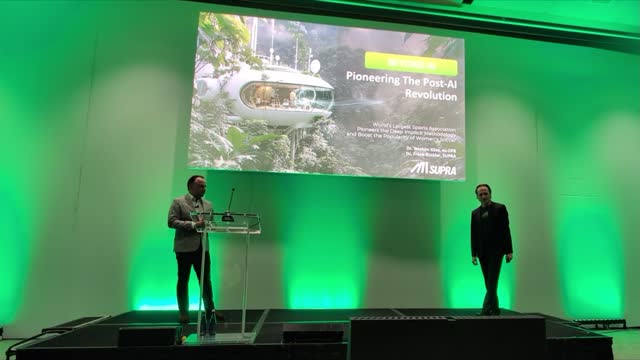
Here's the image I used in our talk at IIEX 2026 in Washington, DC.
"We", our rational minds, are a rider on a wild mustang.
The rider sits tall in the saddle. He holds the reins. He'll give you an articulate account of the route and why he chose it. But watch the animal, not the man: the mustang goes where the mustang goes. Toward what feels safe. Away from what smells wrong. Along paths it has taken a thousand times before.
Jonathan Haidt made the same point with a rider on an elephant. I prefer the mustang, because an elephant at least walks slowly. The mustang bolts.
And here is the sentence that should reorganize your marketing budget:
As long as we don't realize we're the rider, we can't even begin to tame the mustang.
Marketing that targets awareness and attention is marketing addressed to the rider. Arguments, claims, feature lists, "did you notice our ad?" All of it assumes the rider decides. He doesn't. He narrates. Which means we spend billions trying to convince the rider… while the mustang decides.
That's why awareness is a vanity metric. It measures whether the rider noticed you. A brand can be famous and never chosen. Another is barely "aware" in the tracker and gets grabbed off the shelf by pure instinct. If your KPI can't distinguish these two situations, it isn't measuring what drives your revenue. I've written before about where this leads at industry scale. It's a core reason market research keeps failing.
The Question That Follows
Now comes the uncomfortable part. If you accept the premise, decisions are made by the subconscious mind, a question follows that most of the industry avoids:
What should be the research object of market research?
Not "which method is trendy." Deeper: what are we even supposed to be measuring?
Because if the mustang decides, then the research object cannot be the rider's opinions. Yet look at the standard toolkit:
Likert scales? A five-point agreement scale is a questionnaire addressed directly to the rider. It captures the press release, fully formatted.
Open-ended questions? A longer press release. Richer language, same author.
AI-moderated interviews? Here the industry is currently fooling itself at scale. An AI moderator makes the conversation cheaper, faster, more natural… but it's still a conversation with the rider. Making the interview smarter doesn't change who's answering. You've automated the collection of rationalizations.
Wrong remains wrong, even at 10x the speed.
What Research Looks Like When the Mustang Is the Object
The research object has to shift: from stated opinions to the subconscious drivers of behavior. From what people say to what actually moves them. Three consequences follow.
Research designed for the mustang:
- Measure implicitly, not just explicitly. Reaction-time-based methods capture associations before the rider can edit them, what people know before they think.
- Infer causally, not descriptively. The question is never "which associations exist?" but "which associations actually drive choice?" That's a causal inference problem, not a reporting problem.
- Judge brand and creative work by what it builds in the mustang, implicit memory and association, not by whether the rider noticed or liked it.
This is exactly the architecture of our Deep Implicit Research framework: frame the decision space with methods that surface intuitive signals, measure subconscious associations at scale, then infer causally which of them drive behavior.
And it changes the KPIs. A brand tracker built this way predicts sales, instead of reporting fame. Creative strategy gets evaluated by the associations an ad builds, which, by the way, happens even without conscious attention. The mustang learns while the rider looks elsewhere.
Vanity metrics flatter the marketer the same way the funnel flatters the customer. Both feel rational. Both measure the narrator.
Measure the mustang.
This is how you 10x your marketing.
Vanity metrics: frequently asked questions
Why are awareness and attention vanity metrics?
Because they measure whether the rational mind noticed you, and the rational mind doesn't make the buying decision. Awareness metrics rest on the funnel belief that customers notice, review, desire, and then decide. In reality, the subconscious decides and the conscious mind rationalizes afterward. A brand can be highly aware and never chosen, or barely noticed and instinctively picked. That's why SUPRA measures implicit associations and their causal link to behavior instead.
What is the rider-and-mustang metaphor in marketing?
The rational mind is a rider sitting on a wild mustang, the subconscious. The rider believes he steers; mostly he narrates where the mustang was going anyway. The image echoes Jonathan Haidt's rider and elephant and Kahneman's System 1 and System 2. For marketing the consequence is brutal: campaigns built to convince the rider with arguments and awareness miss the actual decision-maker. You cannot tame the mustang until you admit it exists.
If decisions are made subconsciously, what should market research measure?
The research object has to shift from stated opinions to the subconscious drivers of behavior: implicit associations, intuitive goals, and their causal connection to choice. That means reaction-time-based implicit measurement instead of Likert scales, and Causal AI to infer which associations actually drive buying. This is the core of SUPRA's Deep Implicit Research framework, measure what the mustang responds to, not what the rider reports.
Do Likert scales, open-ended questions, and AI-moderated interviews still have a place?
As windows into the rider's narrative, yes, as measures of why people buy, no. Likert scales, open-ends, and AI-moderated interviews all sample conscious self-reports, and making an interview conversational doesn't make its answers causal. They remain useful for framing hypotheses and mapping language. For decision-grade evidence, they must be paired with implicit measurement and causal inference, as in SUPRA's Deep Implicit Research approach.
Dr. Frank Buckler advises leadership teams on growth decisions that depend on why customers choose. He founded SUPRA, holds a PhD in marketing and was among the first to apply causal AI to marketing questions. His latest book is THE TOP 5%.
