


The short answer
DeepCause™ is the method SUPRA uses to find out why customers really buy. It has three steps. First it uncovers what customers feel when they buy but don't put into words. Then it measures that across hundreds or thousands of buyers. Finally, Causal AI works out which of it actually drives the purchase. The result is a ranked list of the real reasons to buy, each with the size of its effect.
Why DeepCause is needed
Ask customers why they buy, and you get a story. People decide in a split second and explain the decision afterwards. Surveys measure the explanation. That is why so many "top drivers" move nothing when you spend money on them.
We call this the say-do gap: the distance between what customers say and what they do. The usual tools don't close it. Surveys capture what customers think matters. Marketing mix models and attribution show where the money went. None of them shows why someone buys.
Dog owners say health. They buy value.
1,069 dog owners in the US rated 32 goals they connect with dog food. At the top: "my dog stays healthy". Yet this goal has hardly any effect on what they buy.
The strongest sources of good value are two feelings: having made a smart choice and being proud of it. Hardly anyone says that in a survey.
The three steps of DeepCause
Each step answers its own question: what plays a role in the purchase at all, how strongly it is anchored in real buyers, and which of it causes the purchase.

Uncover the hidden decision space
If you only ask about the reasons your team came up with beforehand, those are the only ones you will find. So the first step brings out the intuitive signals: images, words and feelings that play a part in the purchase before the mind turns them into a reasonable story.
For this we use qualitative methods such as a-EEG™. People settle into a calm, focused state and then answer one question: why does your customer buy? The first answer counts, not the clever one. Frank Buckler presented the method at the ESOMAR Congress 2025 in Prague. It was validated together with the German Football Association (DFB) and Ostfalia University of Applied Sciences.

Measure intuition at scale
What comes up in step one are hints. Step two turns them into numbers. Across hundreds or thousands of real buyers, we measure how strongly they connect a brand or product with each of these reasons.
For this we use implicit methods, such as reaction times in the Implicit Association Test (IAT). How fast does someone link a brand with "smart choice"? A fast answer shows what a person associates before they start to explain. The data set captures intuition, and polite answers drop out.

Find what actually drives the purchase
Many things show up together with the purchase. Only some of them cause it. In step three, Causal AI separates cause from side effect. The method behind it is called Universal Structure Modeling. It detects effects that work through a detour, factors that only work in combination, and effects that only kick in above a threshold. A classic key driver analysis misses exactly these.
The model puts a number on how strongly each reason drives the purchase and simulates what a change would bring. So before a decision, you can say what it is likely to achieve.
What makes DeepCause different
Compared with a survey
A survey measures what customers say about themselves. DeepCause measures what they intuitively connect, and tests whether it affects the purchase.
Compared with key driver analysis
A classic key driver analysis shows what occurs together with the purchase. DeepCause shows what causes it, and how strongly.
Compared with MMM and attribution
These models show which channel delivered how much. DeepCause shows why customers buy and what you should change in your brand, price or product.
What DeepCause is used for
Wherever an expensive decision depends on why customers buy:
- Brand: Which messages make customers buy, and which ones they only like.
- Pricing and packaging: Which prices and packages customers actually choose.
- Product and innovation: Which features drive the purchase, and which only add cost.
- Advertising and creative: Which visuals, claims and packaging sell.
- Budget: What an action is worth, in numbers your CFO accepts.
From reason to buy to approved budget
With DeepCause, Sonos found that reliable streaming drives its Net Promoter Score (NPS). The model forecast that better streaming would lift NPS by 6 points and showed what that meant for upsell and word of mouth. The budget was approved. Six months later, the measured result matched the forecast.
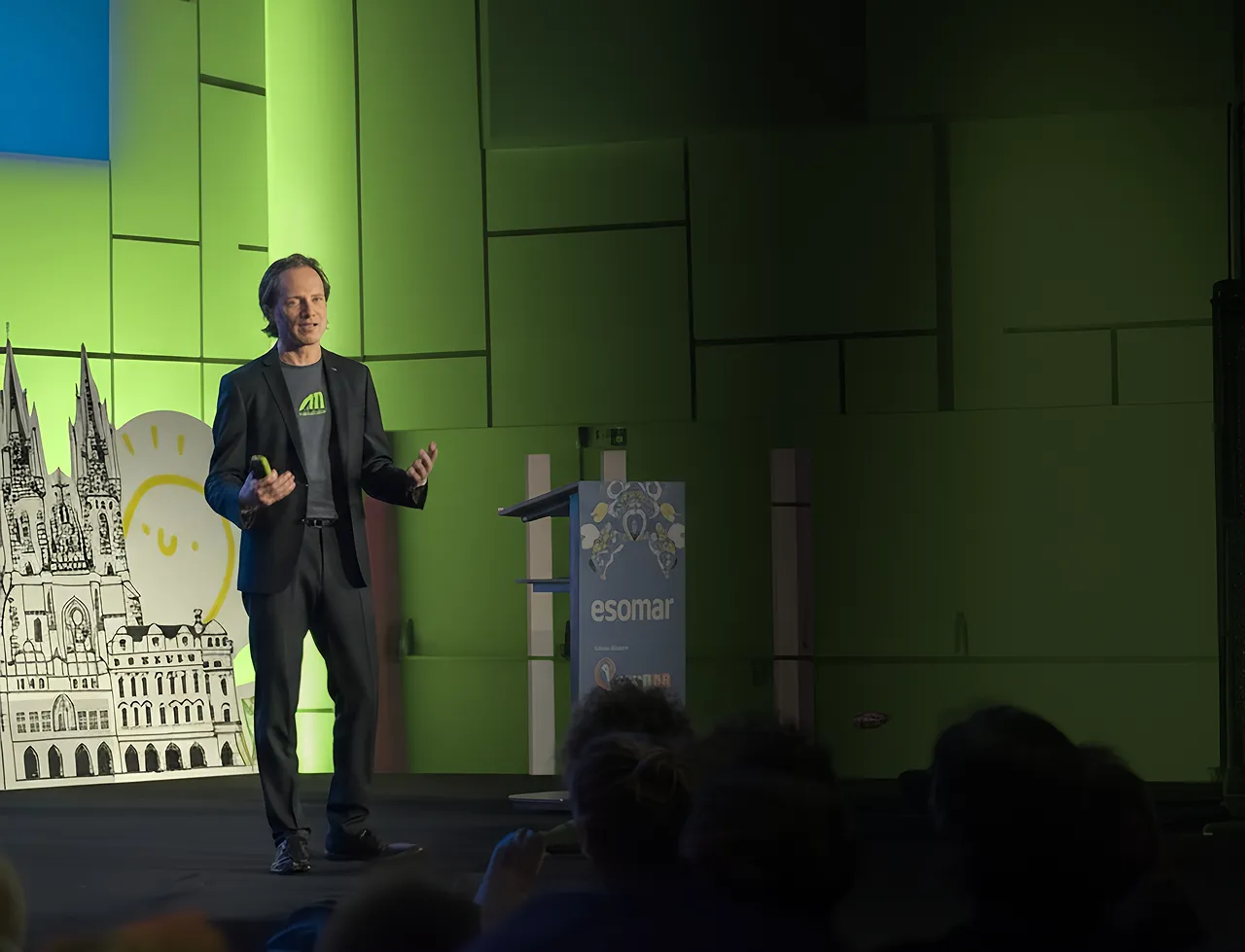
DeepCause was developed by Dr. Frank Buckler. He has been building marketing science methods since 1999, and his research has been awarded 6 times at the ESOMAR World Congress. His clients include T-Mobile, Sonos and Microsoft.
Frequently asked questions
Is DeepCause a survey?

Partly. In step two we survey many buyers. But we don't ask them what matters to them. We measure what they connect spontaneously, and then calculate which of it affects the purchase.
What is the difference between DeepCause and Causal AI?
Causal AI is step three. It can only work with the data you give it. The first two steps of DeepCause make sure that data also contains the reasons customers don't say out loud.
Which companies is DeepCause for?
For brands where a lot of money depends on a decision about brand, price, product or advertising. The method is not tied to an industry. We have used it in telecoms, insurance, consumer goods and technology.
Can I try DeepCause myself?
Step one, yes. The DeepCause™ Download is a 15-minute guided audio. You listen yourself, write down three lines, and repeat it with seven colleagues or customers. What two out of three write down is your core reason to buy.
