

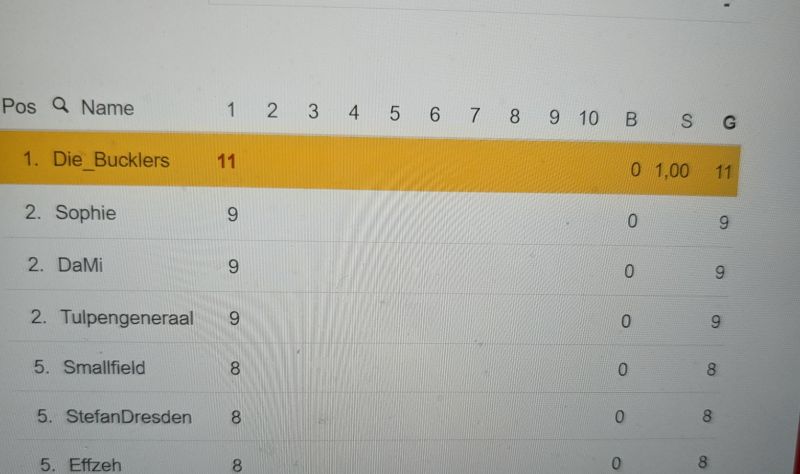
This summer I joined a local betting pool for the FIFA World Cup. Seventy-five participants. Over 100 games to predict and type into an online tool.
Here's the interesting part: most participants, probably the vast majority, used AI to come up with their bets.
Same tournament. Same games. Same class of AI tools.
And yet the scores on the leaderboard couldn't be more different.
I led the pack as the best better until day 5. Then I drowned.
Both halves of that sentence carry a lesson. And both lessons are ones I watch marketing organizations relearn, expensively, every single year.
Why I Was Winning: The Smarter the User, the Smarter the AI
I wasn't leading because I know more about soccer. I don't. I was leading because I used pre-knowledge to prompt the AI well.
Most participants simply asked AI to bet the games. I did two things differently.
1. I told the AI what good data looks like
Don't just ask AI. Make sure it gets the right data sources. I instructed Claude to research not just betting odds, but also prediction markets, because prediction markets typically work even better than bookmaker quotes. They aggregate the judgment of people putting money on the line, continuously, in real time.
Anyone who has spent time with forecasting knows this. The AI, left to its own devices, doesn't necessarily start there.
2. I injected better meta-thinking
Data sources alone aren't enough. You have to give the AI a thinking framework that actually predicts outcomes, not one that merely sounds plausible.
My framework: among good teams, the ones with better team coherence and mood tend to win. So I had Claude research each team's trend over the past 10 games and scan media coverage for signals about team chemistry and morale.
That's domain knowledge translated into a prompt. The AI executed the research brilliantly, but the research design came from me.
Learning No. 1: The smarter the user, the smarter the AI's response.
This is exactly what we see with Causal AI in marketing. The algorithm is powerful. But the questions you ask it, the variables you feed it, the causal hypotheses you let it test. Those come from human expertise. AI doesn't replace the expert. It multiplies the expert. And it multiplies the amateur too… by a much smaller number. That's also why marketing leaders need to understand Causal AI themselves, not just delegate it.
Why I Drowned: The Handoff That Killed My Lead
Now the embarrassing part.
After the AI finished its research, over a hundred results needed to be entered into the online betting tool. Tedious work. I wasn't willing to do it myself, and I was too silly to see the risk.
So I asked my son to type in the results.
Here's what I didn't account for: the betting tool listed the teams in a different order than my AI research did. So my son mixed up results, entering wins where the AI had predicted losses. And after 40 or 50 games, his concentration faded. Errors multiplied.
And I never checked his work.
The research was excellent. The predictions were strong. The execution destroyed everything.
I met my "strongest opponent" from the pool the other day. He also used AI, of course. The difference? He let Claude with the Chrome plugin enter the results into the tool itself. No handoff. No translation layer. No fatigue after game 40.
Learning No. 2: Think of the process from insights to impact, end to end.
An insight is worth nothing if it is not translated correctly into the right actions.
This Is Your Marketing Organization
To me, this little betting-pool disaster exemplifies what happens in marketing all the time.
The chain is always the same: Research → Strategy → Execution.
And it breaks in exactly the two places my betting run broke.
Break No. 1: An unknowledgeable human behind the AI
The more knowledgeable the human behind the AI, the better the research, the strategy, and the execution. Garbage prompts produce plausible-sounding garbage. A researcher who doesn't know that implicit methods beat direct questioning will ask AI to summarize survey verbatims, and get a beautifully written version of the wrong answer. This is why we built Deep Implicit Research around expert-designed frameworks, not around whatever the tool defaults to.
Break No. 2: Silos between the three steps
All of it falls flat if research, strategy, and execution are done in silos.
I have seen it so often it hurts: creatives interpreting research the way they want to interpret it, not the way it was meant. The insight says "customers don't perceive the product's uniqueness." The campaign that ships celebrates the brand's heritage. Somewhere between the research deck and the creative brief, the signal got entered in the wrong order.
Just like my son with the betting tool. No bad intent. Just a handoff, a format mismatch, and fading attention.
Wrong remains wrong, no matter how good the insight was upstream.
Before your next AI-assisted project, ask:
- Sources: Did an expert define which data the AI should use, or did the AI pick whatever was convenient?
- Frameworks: Did you give the AI a thinking model that predicts outcomes, or one that merely sounds plausible?
- Handoffs: Where does the insight change hands? Every handoff is a place where wins become losses.
- Verification: Who checks that what reached the market is what the research actually said? (I didn't. It cost me the pool.)
- End-to-end ownership: Is one mind accountable from insight to impact, or three departments accountable for one-third each?
The Insights-to-Impact Chain
Call it the Insights-to-Impact Chain: the unbroken line from what the research found, through what the strategy decided, to what the market actually experienced.
Most companies invest heavily in the first link and leave the rest to organizational luck. They buy world-class research, then hand it across two silo boundaries and hope.
Hope is not a process.
The fix isn't more AI. My whole betting pool had AI. The fix is expertise at the front of the chain and integration across the whole of it. That's why SUPRA doesn't hand over a report and wish you luck, our engagements are built to carry the insight all the way into strategy and execution, because that's where the value is created or destroyed.
My strongest opponent understood this instinctively. Same AI. Same games. He just refused to let a sloppy last mile ruin a brilliant first mile.
Design the chain end to end. That's how you 10x your impact.
AI and expertise: frequently asked questions
Does AI make domain expertise obsolete?
No, the opposite. The smarter the user, the smarter the AI's response. In a World Cup betting pool where most of 75 participants used AI, the scores varied wildly because the prompting varied wildly. Experts know which data sources are trustworthy and which thinking frameworks actually predict outcomes rather than merely sounding plausible. That is exactly why SUPRA pairs Causal AI with 25+ years of marketing science expertise.
What is the Insights-to-Impact Chain?
The Insights-to-Impact Chain is the end-to-end process from research through strategy to execution. An insight is worth nothing if it is not translated correctly into the right actions. Most organizations run the three steps in silos, so insights get reinterpreted or garbled at each handoff, like betting results entered in the wrong order. SUPRA designs the chain end to end, so what the research found is what the market actually receives.
Why do AI-generated insights fail in execution?
Because of handoffs. Every time an insight passes between silos, research to strategy, strategy to creative execution. It gets reinterpreted by people who were not part of the analysis. Creatives often read research the way they want to, not the way it was meant. Fatigue, format mismatches, and wishful interpretation corrupt the signal. The fix is process design: keep the chain unbroken from insight to action.
How do you prompt AI for better predictions and insights?
Two rules. First, tell the AI what good data looks like, direct it to superior sources, such as prediction markets in addition to betting odds. Second, inject meta-thinking: give it causal frameworks that are known to drive outcomes, like recent form and team mood, instead of letting it default to plausible-sounding averages. This is the same logic behind Causal AI and Deep Implicit Research: model what drives results, not what merely correlates.
Dr. Frank Buckler advises leadership teams on growth decisions that depend on why customers choose. He founded SUPRA, holds a PhD in marketing and was among the first to apply causal AI to marketing questions. His latest book is THE TOP 5%.
