

Brand Strategy
Build brands consumers actually choose.
Customers rarely choose a brand for the features it advertises. At T-Mobile USA, none of the headline features caused consideration on its own; they were proof of the Uncarrier stance customers were actually buying. We find what your customers are really buying, and what your brand must not break.


The methodology gap
Brand strategy today is built on an outdated model of why customers buy.
Most brand strategy is built on what customers say they think, surveys, prompted recall, stated preference. The gap between stated preference and revealed behavior is the largest source of decision error in brand strategy. We call it the say-do gap.
We map your brand’s Demand Architecture, the motives, barriers and category codes that decide whether your brand is chosen, then identify the causal drivers behind those choices.

Leadership decision · T-Mobile USA
The new positioning was working. Nobody could agree on why.
Flat rate, no contracts or the free iPhone: inside T-Mobile, the debate was which feature drove the turnaround. The evidence said none of them. Customers were choosing the Uncarrier stance; the features were its proof. That ended the debate and set the next moves.
Dr. Frank Buckler with the Chairman of the Board
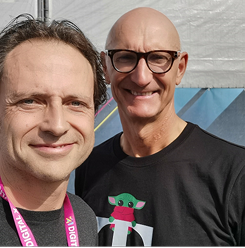
Dr. Buckler & Tim Höttges
T-Mobile Chairman of the Board

Situation
T-Mobile was introducing a new positioning. Internal debates asked: what causes success, the flatrate, elimination of contract terms, or the free iPhone that came with the plan?
What SUPRA did
We analyzed the client’s brand data with SUPRA Causal AI. The result: none of those features directly caused consideration. Instead, they were reasons that proved the “Uncarrier” positioning. The positioning was the cause; the features were the proof.
Result
The Uncarrier strategy introduced new reasons over the following quarters and years, resulting in 4× revenue growth and switching losses moving from $7B to $8B in profits.
4×
revenue growth at record profits
$7B → $8B in switching profits
Brand strategy the real way
Brand strategy that explains share, not just measures awareness.
Most brand strategy is inefficient because it relies on an outdated model of why customers buy. It leans on awareness, consideration, and stated preference, metrics that often have weak correlation with actual market share.
We do brand strategy the real way, using the same implicit and causal insights methods we use across strategy development. The measurements you take are the same measurements that drive your decisions.
Brand Execution
From clarity to execution.
A finding that never reaches the market changes nothing. We stay involved until the decision is in market: positioning, creative briefing, campaign measurement.
We work performance-based where it fits, so part of our fee depends on the result.

Brand preference is one layer of a brand’s Demand Architecture, the full map of what drives customer choice.
Where we start
One brand decision in front of you?
Tell us which one: the positioning, the stretch, the tracker that stopped explaining share. The first conversation is about that decision, not about a package.
