1Problem
Budgets are shrinking.
When growth slows, marketing is one of the first lines the CFO cuts. Every year you defend the same plan with less money.
 Reserve a founding seat

Reclaim Growth Lab
Become the person your CMO calls before a growth decision.
Every year you defend the same plan with less money. In six weeks you learn why your customers buy, where AI belongs in your marketing, and how to build a growth plan your CEO and CFO will back.
Founding cohort: 10 seats at half price, starting 1 March 2027.
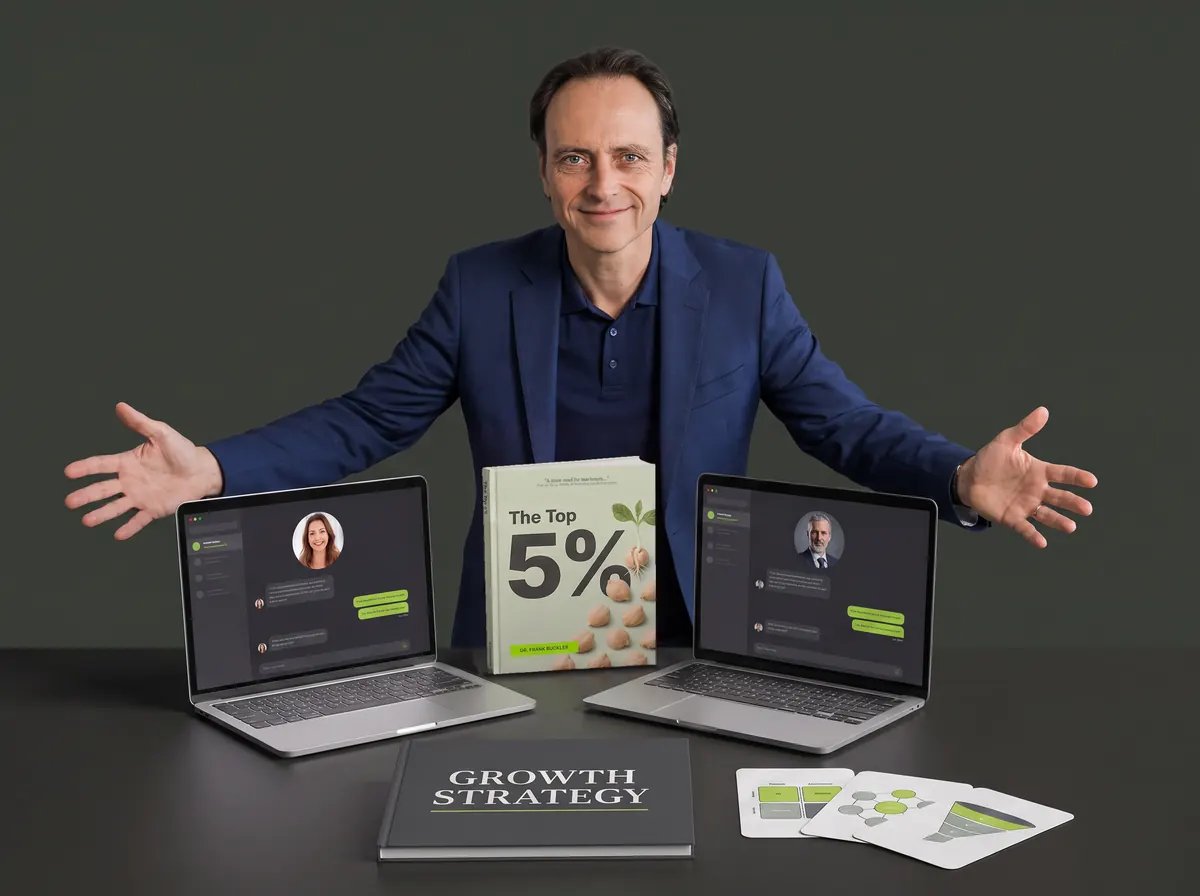






Taught by Dr. Frank Buckler, developer of the peer-reviewed Causal AI method behind SUPRA. Guest experts: Thomas Barta, Dr. Jonathan Mall, Dirk Ziems, Per Kasch and Prof. Dr. Michael Urselmann.
Client case

Sonos predicted that better streaming reliability would lift NPS by 6 points and showed what that meant for upsell and word of mouth. With that case the team won the funding. Six months later the measured results matched the forecast, and marketing earned the trust of finance.
Most budget fights are lost before they start, because nobody can say which part of the plan creates growth. Once you know the cause and can put a number on the effect, the conversation with finance changes.
The lab teaches the same steps: find the cause, put a number on the effect, make the case to finance.
Cause, effect, budget
Client case: Sonos.

One of the most productive labs I've ever been part of.

This lab is so to the point that it helps you get results in days.

When we need clarity grounded in causal truth before we build strategy, SUPRA is the first name I reach for.

SUPRA exposed the limits of conventional research. For high-stakes CMO decisions, they're my trusted choice.

What every marketing leader is up against
When growth slows, marketing is one of the first lines the CFO cuts. Every year you defend the same plan with less money.
The message from the top is to do more with fewer people. You also see the risk: cheap AI output makes brands interchangeable. Someone has to decide where AI helps and where it costs quality. If you don't, IT or procurement will.
To get investment, marketing has to show its impact in the figures the CFO steers by: revenue, margin, cash and risk. Reach and awareness scores don't carry that conversation.
Teams know what customers say in surveys. They rarely know which factors drive the purchase and how much each one weighs. Without that knowledge, AI produces faster versions of the wrong message, and every budget argument rests on opinion.
Six weeks from now
The lab
You start with why people buy and finish with your own customer twin. In between you pick the focus modules that fit your job; all four are included. One lesson a week, in the format that fits your day. For marketing leaders under budget pressure, the two that matter most are AI in marketing and proving impact to the CFO.
Lesson 1 · Cause · for everyone
Growth has many levers, and the biggest one is customer understanding. Most purchase decisions start below conscious thought, in needs people can't put into words, so surveys miss them. You learn why, and how SUPRA's DeepCause™ method makes these drivers visible. Then you apply it to your business with our proprietary qualitative method. We go through the cases of T-Mobile USA, Sonos and Kindernothilfe.
Focus 2 · Scale
With Dr. Jonathan Mall
The AI systems marketing can use today, from content and analysis to agents and digital twins. Then a framework to decide, task by task, what to automate, where AI supports your team and what stays in human hands. What is known can be automated. Where validated customer knowledge is missing, you need insight.
Focus 3 · Cash
With Thomas Barta
A framework that links marketing to revenue, margin, cash and risk. You frame your growth plan as an investment with expected return and risk, learn which methods prove cause and effect and which only show correlation, and put your case in front of a CFO twin that asks what a finance lead would ask.
Focus 4 · Create
With Per Kasch
What a picture, a message and a brand signal do to purchase. You learn the 2+2 Rule from SUPRA's visual impact research: two qualities that sell in every category, and two that follow your buyer's main worry. Then how to brief qualities instead of styles, and how to test visuals by their effect on purchase instead of liking or attention.
Focus 5 · Convert
With Prof. Dr. Michael Urselmann
Why people respond to a mailing, an email or a landing page, or throw it away. You find the response drivers of your audience, write challengers with the Challenger Advisor, an AI advisor trained on neuroscience research and SUPRA's findings, and see where a draft works against those drivers.
Lesson 6 · Build · for everyone
You apply the method to your own market. With a filter framework you sort the customer insights you already have. With our qualitative method you collect what your team knows about your customers but has never written down. From both you build a customer twin, a digital customer you can ask about messages, ads, offers and drafts before money is spent. Then you iterate: you test messages and offers on the customer twin, and your growth plan on the CFO twin, until the plan holds. You also learn where a twin is reliable and where a decision needs real measurement.
How the lab works
Built for full calendars
Each lesson comes in all four formats. Pick the one that fits your day. No time to prepare? Join the call anyway. Bring your question, leave with an answer.
Your material
The plan you want your CEO and CFO to back, the AI request from your board, and what you already know about your customers. You leave with a plan that has already faced a CFO twin.

Your instructor
In 1994, as a student, Frank built neural networks to predict the stock market. They found patterns, and the patterns kept breaking. That is where he learned that correlation is not cause.
Later, in pricing projects at Simon-Kucher, he saw marketing teams with the same problem: plenty of data on what customers say, little on why they buy, and a CFO who could tell the difference. His doctoral research was his answer. It became the Causal AI method behind SUPRA, which he founded in 2014. The method is peer-reviewed and in use at many leading brands.
He is the author of The Top 5%, Think Causal Not Casual and Pricing Intelligence, and has presented six times at the ESOMAR global congress.
Guest experts
Free, before you decide
The questions a finance lead asks about a marketing plan, and how to answer each one with cause and effect instead of reach and awareness.
What it is
A two-page PDF you can use for your next planning round, whether you join the lab or not. Free, sent by email.
Investment
Founding cohort · starts 1 March 2027
The first 10 participants pay 0.5k Euro instead of 1k Euro. In return they share their case with us in anonymized form, so the next cohort can learn from it.
Beyond the lab
The lab gives you the method and a first model. When your team wants measured drivers, SUPRA runs the study with you.
They tell you which channel got the credit, not why customers bought.
People buy differently from how they say they will.
It shows what correlated before, not what causes purchase.
Your lab fee counts toward the group study or the custom study if you upgrade within 90 days, and the group study counts toward the custom study. Scope and price are fixed in writing before the start.
Questions
No. AI in marketing is one focus module. The lab starts with why customers buy, because AI only helps once you know which message is worth producing faster.
Yes. All four focus modules are included. Most participants take the one that matches their job and one more, often the module on proving impact to the CFO.
The lab starts on 1 March 2027. The first 10 participants pay 0.5k Euro instead of 1k Euro. In return they agree that we may use their case in anonymized form as an example for future participants.
Usually your training or team budget. The budget request kit gives you a ready email and a one-page case to ask your manager. You get an invoice, and the fee counts toward a group study or a custom study if you upgrade within 90 days.
Everyone in the lab joins a private online group: marketing, brand, insight and CRM leads at consumer brands who prepare growth decisions for their CMO. You stay in the group after the six weeks.
What you already know about your customers: research reports, reviews, notes from sales and service, and the plan, asset or campaign you are working on. The more you bring, the sharper your first model.
About one hour a week, call included. Each lesson comes as a 25-minute video, an 8-minute read and 5 minutes of slides, and you can ask the lesson's AI assistant about your own case. No time to prepare? Join the call anyway. Bring your question, leave with an answer.
No. It is a first model that lets you test ideas and set priorities quickly. It shows you where deeper research pays off.
The AI skills run in your own AI tool. Inputs to the twins are anonymous. Your assets and plans are not shared with other participants.